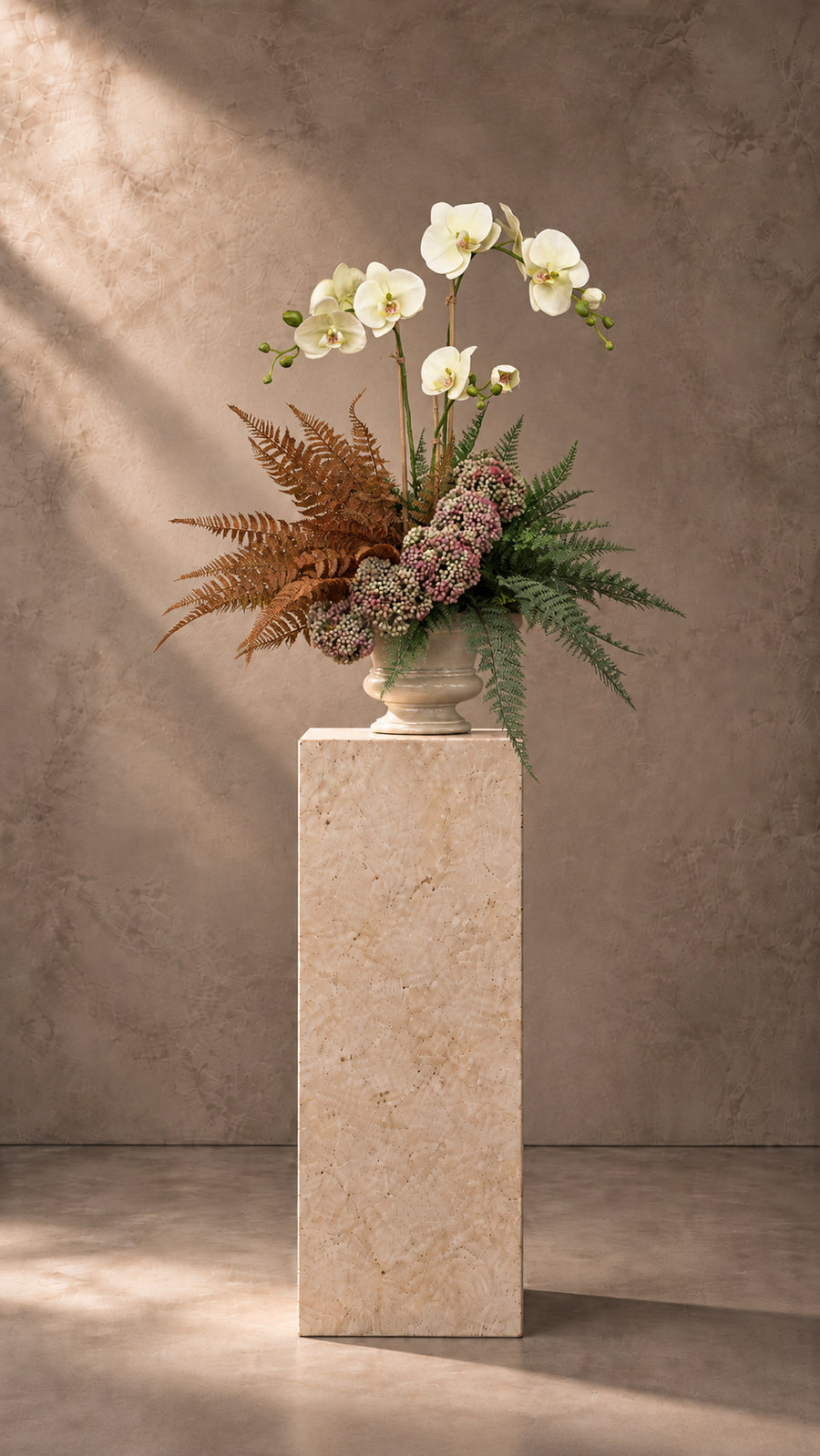
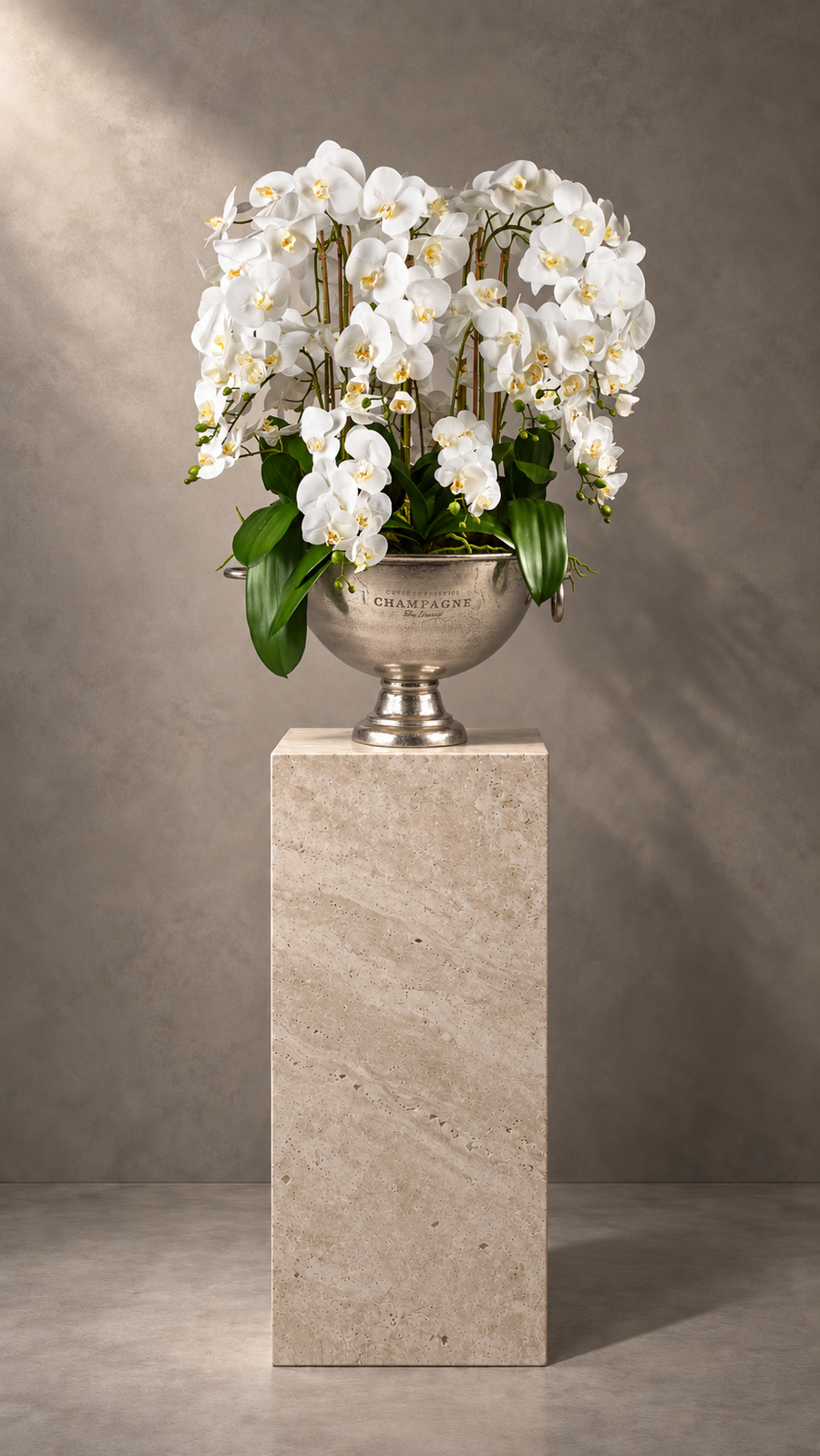
One of the few drawbacks of faux flowers is that they don't change by themselves. That's a strength in a busy lobby, but regular guests and diners do notice when the same arrangement has stood in the same spot for three years. The answer is a seasonal rotation.
How a rotation works
Every display has two parts:
- The permanent structure. The vessel, the main foliage and often a core of white orchids or greenery. This stays all year.
- The seasonal layer. The flowers, berries, blossom and accents that give each season its character. These change.
Four times a year, or around key dates, the seasonal layer comes out and a new one goes in. The display looks different, the space feels fresh, and the expensive structure keeps working.
What each season looks like
Spring
Blossom, magnolia, tulips and fresh greens. Light, hopeful and perfect from February onwards. The Maggie, with its magnolia in a turquoise vase, has that spring feeling.
Summer
Fuller blooms, hydrangea, roses and tropicals. Bright colour for terraces and summer menus.
Autumn
Bronze, amber, dried textures and deep reds. I've shared the stems I'm using in my autumn artificial flowers guide, and you can see the pieces in the autumn collection.
Winter and Christmas
Frosted pine, berries, white flowers and silver or gold. After Christmas, a winter whites scheme carries you to spring.
Why rotations make business sense
- Repeat guests see something new. It gives regulars a reason to look again and share it.
- Seasonal menus and campaigns line up. Your florals can match a new menu, a summer terrace launch or a Christmas campaign.
- The big investment lasts. You pay for the structure once and refresh only what changes.
- Nothing is wasted. Seasonal layers are stored and can come back the following year.
Choosing your rotation dates
A common rhythm is four changes a year, with an extra Christmas layer from late November to early January. Some restaurants prefer to change with each new menu. Hotels often line changes up with their busy periods, so the lobby looks its best when it's fullest.
Who looks after it
My seasonal refresh service takes care of the changes: designing each season's layer and swapping it in. I've written more about how hotels use rotations in hotel flowers and floral rotations, and venues can also look at my venue partnerships.
Sharon Demmery
Founder & designer, Demmerys Faux Floral Studio