Interior designers working on hotels and restaurants think in specifications. Every fabric, finish and fitting has a reference, a sample and a reason. Florals deserve the same care, because in a finished space they're one of the things guests look at most closely.
When I work with designers, this is the specification we build together.
1. The stems
Luxury faux flowers start with real-touch stems. These are made to feel soft and natural, with lifelike colour variation and detail. For hospitality I specify the flower types that translate best into real-touch materials: orchids, calla lilies, hellebores, roses, hydrangea and tropicals, along with real-touch foliage. Each stem is chosen for how it will be seen: at arm's length on a bar, across a lobby, or beside a dining table.
2. The palette
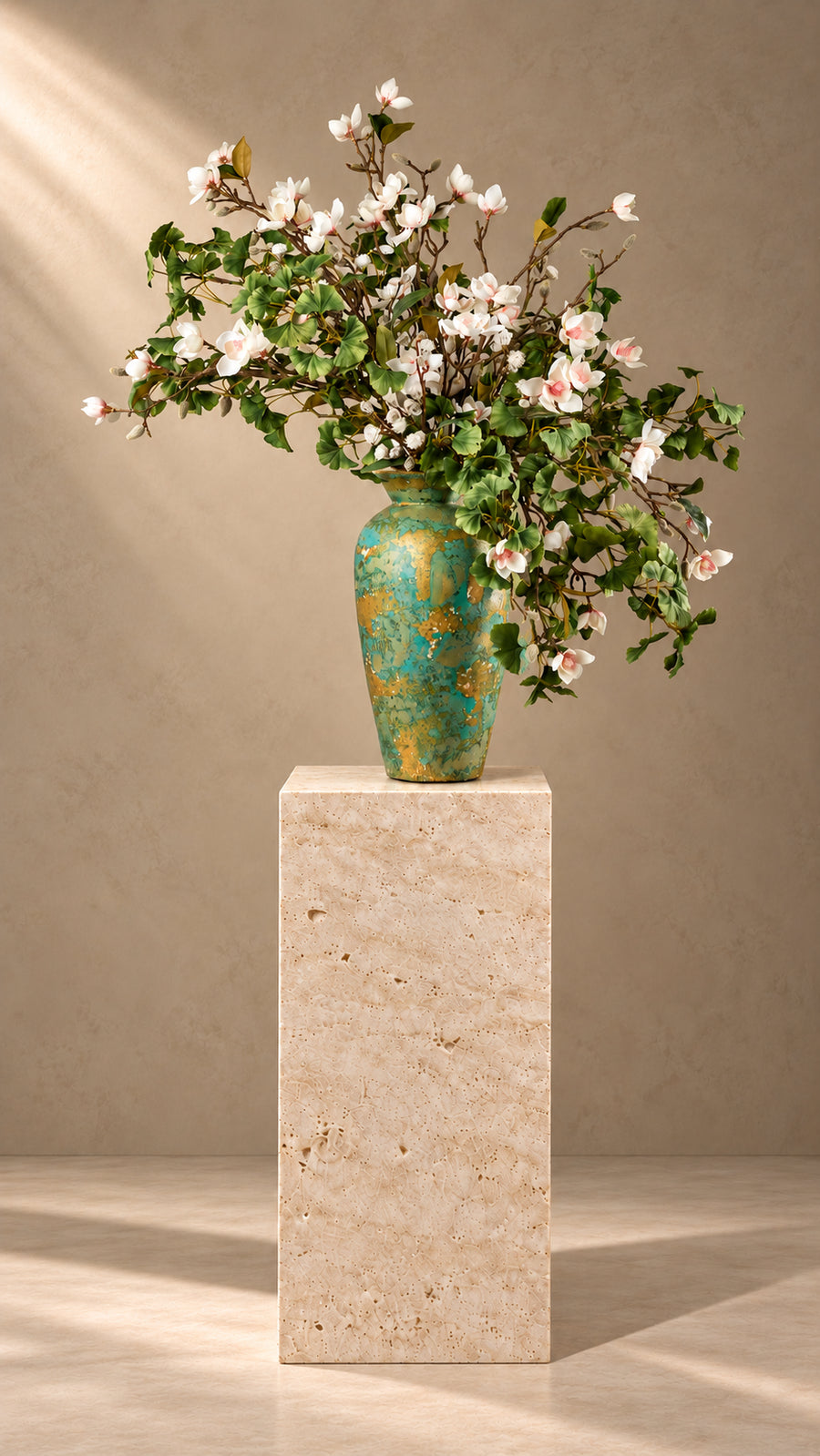
The floral palette is drawn from the scheme. I'll ask for the mood board, fabric swatches and paint references, then propose a palette that supports them. Often that's one hero colour picked from the room and a set of supporting greens and whites. The Gabby, in soft blush and cream, is a good example of how a gentle palette can sit with a luxurious scheme.
3. Scale and placement
We plan florals on the drawings, the same as furniture. Each position gets a height, a width and a viewing distance. A reception arrangement seen from the door, a bar piece seen from a stool and a table piece seen from a chair all need different proportions.
4. The vessel
The vessel is part of the joinery and finishes palette. Metals should match the fittings, stone should sit with the surfaces, and glass should suit the lighting. I source or design vessels to the spec so the florals look like part of the architecture.
5. Safety and compliance
For public spaces we check whether the fire strategy calls for fire-retardant materials, and I supply documentation where needed. My guide to fire retardant artificial plants for hotels and venues explains the basics.
6. Care and longevity
The specification includes a simple care routine for the operator, and where helpful a seasonal refresh so the florals change through the year.
7. Samples and sign-off
Before anything is made, designers can see sample stems and a visual of each piece. Changes happen at this stage, when they're easy.
Working with me
I enjoy working alongside interior designers because the result is always better when florals are considered early. You can read more on my florals for interior designers page and see examples on my luxury artificial flowers page.
Sharon Demmery
Founder & designer, Demmerys Faux Floral Studio